
Blackout: Can the Power Grid be taken down by cyber-criminals?

A cyber-attack on the U.S. power grid could cause widespread disruption, costing millions and endangering lives. Robust defenses and coordinated response plans are critical.

Cybersecurity Threats to the U.S. Power Grid

The power grid is a cornerstone of modern society, seamlessly powering homes, businesses, and critical infrastructure. Yet, its reliability is so ingrained in daily life that it often goes unnoticed—until it fails. While cyber-attacks on personal devices or corporate networks dominate headlines, the notion of a cyber-attack targeting the power grid may seem improbable. However, the 2015 cyber-attack on Ukraine’s power grid, which disrupted electricity for several hours, demonstrated that such an event is not only possible but could have far-reaching consequences if prolonged. This incident raises a critical question: could the United States face a similar threat, and if so, how prepared is the nation to respond?

The Complexity of Attacking a Power Grid

A cyber-attack on a power grid is not akin to hacking a single computer. It requires meticulous orchestration, exploiting vulnerabilities in complex, interconnected systems that blend operational technology (OT) with information technology (IT). Power grids rely on supervisory control and data acquisition (SCADA) systems, which manage electricity distribution, and these systems are increasingly digitized, making them potential targets. The Ukraine attack, attributed to sophisticated actors, involved malware that disrupted control systems, highlighting the level of expertise required for such an operation.

While the Ukraine outage lasted only a few hours, a prolonged disruption—lasting days or weeks—could be catastrophic. The U.S. power grid, while robust, is not immune. Though the likelihood of a successful, large-scale cyber-attack remains low due to the grid’s complexity and existing safeguards, even a small risk warrants serious preparation.

Potential Consequences of a U.S. Power Grid Attack

A sustained power outage across multiple states would unleash widespread disruption. The economic toll could reach hundreds of millions, if not billions, of dollars, affecting industries, supply chains, and essential services. Hospitals, reliant on electricity for life-saving equipment, could face dire challenges, potentially leading to loss of life. Water treatment plants, transportation systems, and communication networks would also be compromised, amplifying the chaos. Such an attack, given its scale and intent, would likely be classified as an act of war, triggering significant geopolitical ramifications.

Current Preparedness and Gaps

U.S. power companies have developed contingency plans to address such scenarios, emphasizing rapid response and coordination. These plans involve collaboration among utilities to restore power quickly and communication with federal and state governments, particularly in multi-state incidents. The Department of Energy and the Federal Energy Regulatory Commission (FERC) play key roles in overseeing grid security, while the North American Electric Reliability Corporation (NERC) enforces cybersecurity standards, such as the Critical Infrastructure Protection (CIP) protocols.

Despite these efforts, some cybersecurity experts argue that current plans have significant shortcomings. Vulnerabilities include outdated infrastructure, inconsistent adoption of cybersecurity best practices across utilities, and insufficient simulation of large-scale attack scenarios. For instance, many systems still rely on legacy equipment that predates modern cybersecurity threats, making them harder to secure. Additionally, the decentralized nature of the U.S. grid, while a strength in some respects, can complicate coordinated responses.

Recommendations for Enhanced Resilience

To bolster defenses, power companies and regulators should prioritize the following:

  1. Modernize Infrastructure: Upgrade legacy systems with secure, resilient technologies and implement robust encryption for SCADA and other critical systems.

  2. Enhance Cybersecurity Standards: Strengthen NERC CIP requirements, ensuring uniform compliance across all utilities, and conduct regular audits to identify weaknesses.

  3. Conduct Realistic Simulations: Perform large-scale, multi-utility cyber-attack drills to test response plans and identify gaps in coordination.

  4. Foster Public-Private Collaboration: Deepen partnerships between utilities, government agencies, and cybersecurity firms to share threat intelligence and best practices.

  5. Invest in Workforce Training: Equip grid operators with advanced cybersecurity skills to detect and mitigate threats in real time.

Conclusion

The U.S. power grid remains a critical yet underappreciated lifeline. While a cyber-attack on the scale required to cause widespread disruption is unlikely, the potential consequences are too severe to ignore. The 2015 Ukraine attack serves as a stark reminder of what is possible, and the U.S. must take proactive steps to fortify its defenses. By addressing vulnerabilities, enhancing response plans, and fostering collaboration, the nation can better safeguard its power grid against an evolving cyber threat landscape, ensuring the lights stay on for all.
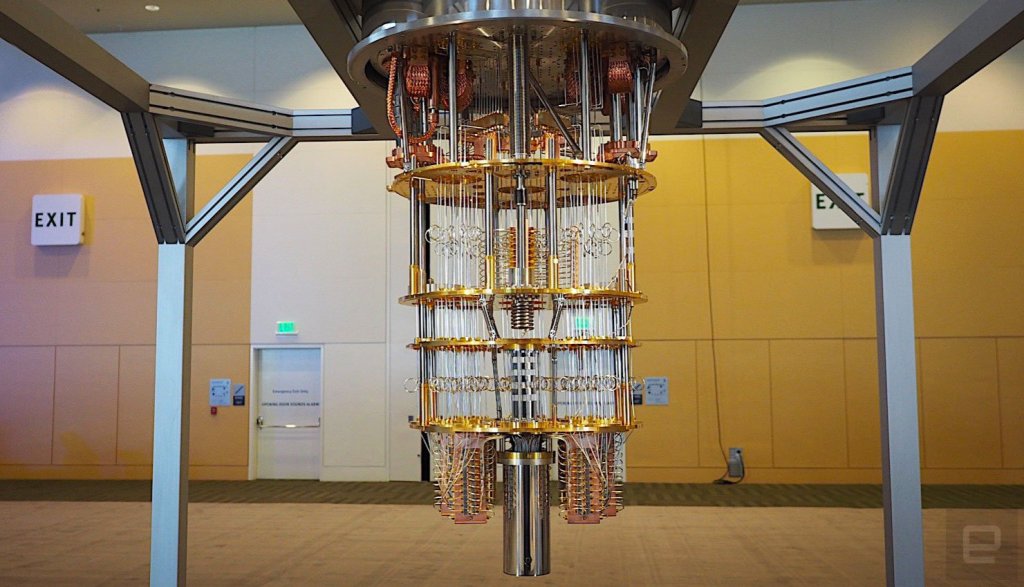
An Eye On Tech – Quantum Computing

Quantum computers promise breakthroughs in science, medicine, and AI, but their ability to break encryption raises cybersecurity concerns, reshaping society’s technological and security landscape.?

IBM’s Quantum Computer

Quantum Computing: A New Era of Computational Power

In January 2025, IBM unveiled its latest breakthrough in quantum computing: a commercial quantum computer accessible via the internet for users to submit quantum calculations. While not available for retail purchase, this development marks a significant step toward broader accessibility of quantum computing technology. To fully appreciate this milestone, it’s essential to understand what quantum computers are and their transformative potential.

The Power of Quantum Computing

Quantum computers represent a paradigm shift in computational capability, far surpassing the limits of even the most advanced classical computers. Unlike traditional systems, quantum computers leverage the unique properties of subatomic particles—superposition and entanglement—through quantum bits, or “qubits.” While classical computers process bits as either 0 or 1, qubits can exist in a superposition of both states simultaneously, enabling quantum computers to tackle complex problems with unprecedented efficiency. This capability promises breakthroughs in fields like cryptography, materials science, and medicine, solving problems once deemed intractable for classical systems.

However, quantum computing is still in its early stages. IBM’s latest quantum computer, while a significant achievement, is not yet considered a “true” quantum computer by researchers. The industry’s ultimate goal is achieving quantum supremacy—a state where quantum computers perform calculations beyond the reach of even the most powerful classical supercomputers. This milestone remains a work in progress but is a driving force for companies like IBM and other global players.

Coexistence of Classical and Quantum Systems

Quantum computers are unlikely to replace classical computers entirely. Instead, the two will likely coexist, each excelling in specific domains. Classical computers will remain essential for everyday tasks, while quantum computers will dominate in specialized areas, such as finding large prime numbers—a critical function in cryptography. Quantum computers can perform such calculations exponentially faster than classical systems, posing both opportunities and challenges for cybersecurity.

For instance, an IBM researcher has warned that quantum computers could potentially break even the most robust encryption protocols almost instantly, a task that would take classical computers billions of years. This capability places encryption in a precarious position, necessitating the development of quantum-resistant cryptographic methods as quantum technology matures.

Emerging Challenges: Quantum Malware

Like classical computers, quantum computers are not immune to security threats. While quantum malware remains a theoretical concern for now, its emergence could become a reality as quantum computing proliferates. Security professionals will need to adapt to this new domain, developing expertise in quantum cybersecurity. On the flip side, quantum computing offers opportunities to enhance security through quantum cryptography, currently the most secure method for transmitting messages, promising a new frontier in secure communication.

Quantum Computing and Artificial Intelligence

Quantum computing also holds immense potential for artificial intelligence (AI). Experts agree that quantum computers could accelerate AI research, enabling smarter and more capable systems. Virtual assistants like Siri could evolve beyond their current limitations, offering seamless interactions and advanced problem-solving capabilities. Some speculate that quantum computing could even pave the way for sentient AI, a prospect that is both groundbreaking and, for some, unsettling. The synergy between quantum computing and AI promises to redefine technological boundaries.

Global Race for Quantum Supremacy

China is currently leading the quantum computing race, investing billions in research and development to maintain its edge. With nearly 500 quantum technology patents compared to the United States’ 248, China’s advancements are significant. The nation is also actively recruiting Chinese scientists from foreign labs, offering incentives to bolster domestic innovation. This leadership raises concerns in Western nations, as a quantum-superior China could neutralize espionage efforts and expand its global influence by exporting advanced quantum technologies.

Despite these competitive dynamics, collaboration between Chinese and Western scientists could accelerate progress in quantum computing, benefiting the global scientific community. Such partnerships could drive innovation, ensuring that quantum advancements are shared for the greater good.

Looking Ahead

As we stand on the cusp of the 2030s, the progress in quantum computing over the past decade is remarkable. IBM’s latest quantum computer, though not yet a retail product, signals a future where quantum and classical systems coexist, each pushing the boundaries of what’s possible. While challenges like quantum malware and encryption vulnerabilities loom, the potential for breakthroughs in AI, cryptography, and scientific discovery is immense. The coming decade promises to be a transformative era for quantum computing—let’s hope it roars as boldly as the 1920s, but with a brighter, more stable conclusion.

Design a site like this with WordPress.com
Get started